
Kuwait Architecture Research Lab
Events & Workshops
KARL convenes researchers, policymakers, practitioners and citizens around critical questions of architecture, urban form, housing and cultural practice in Kuwait and the MENA region.
Featured Workshop · October 2026
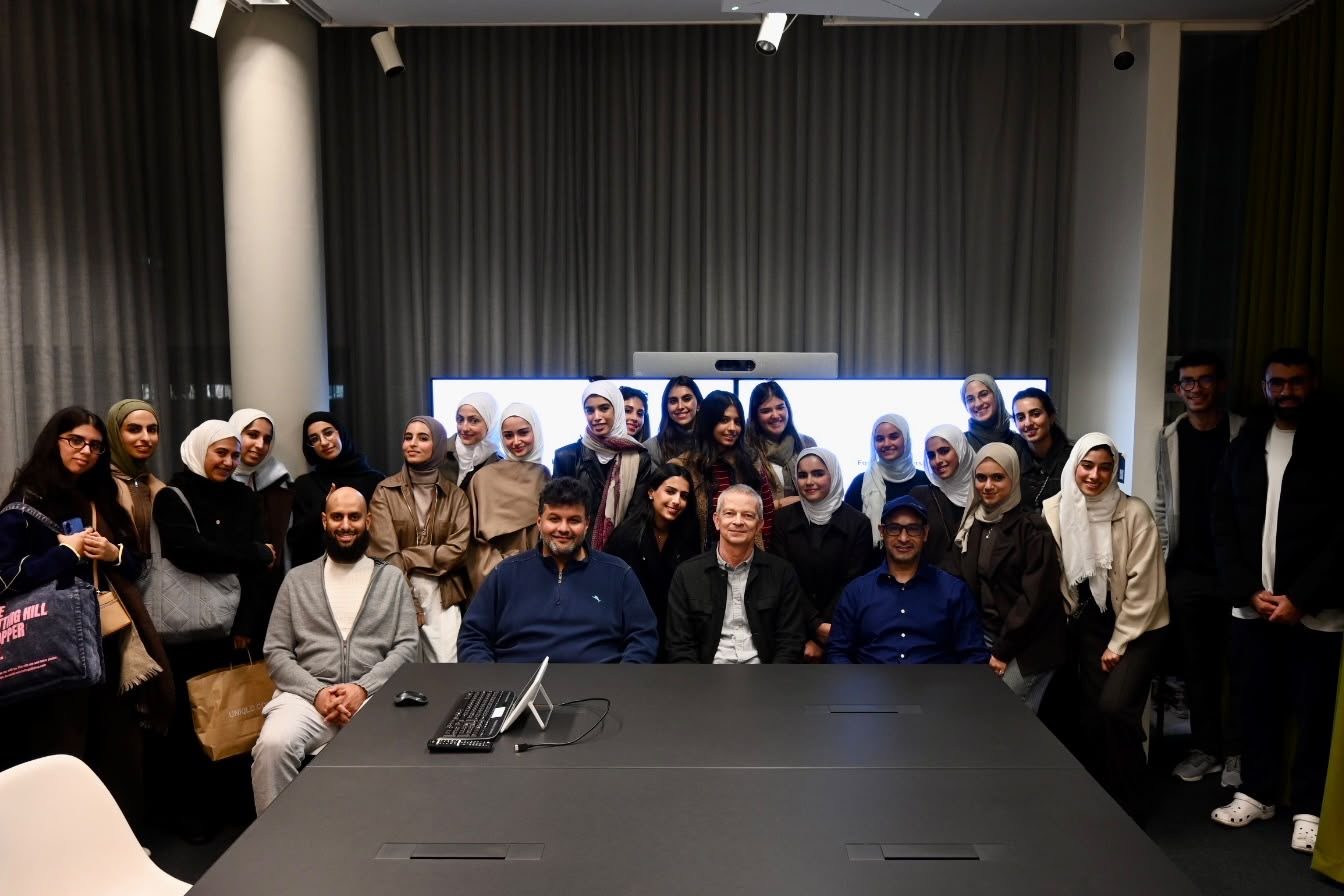
London & Cambridge
Graduation Research Study Trip: London & Cambridge
Fifth-year students in Graduation Project 1, the research-based stage of their graduation project, spent a week in London and Cambridge with KARL and Kuwait University's Department of Architecture.
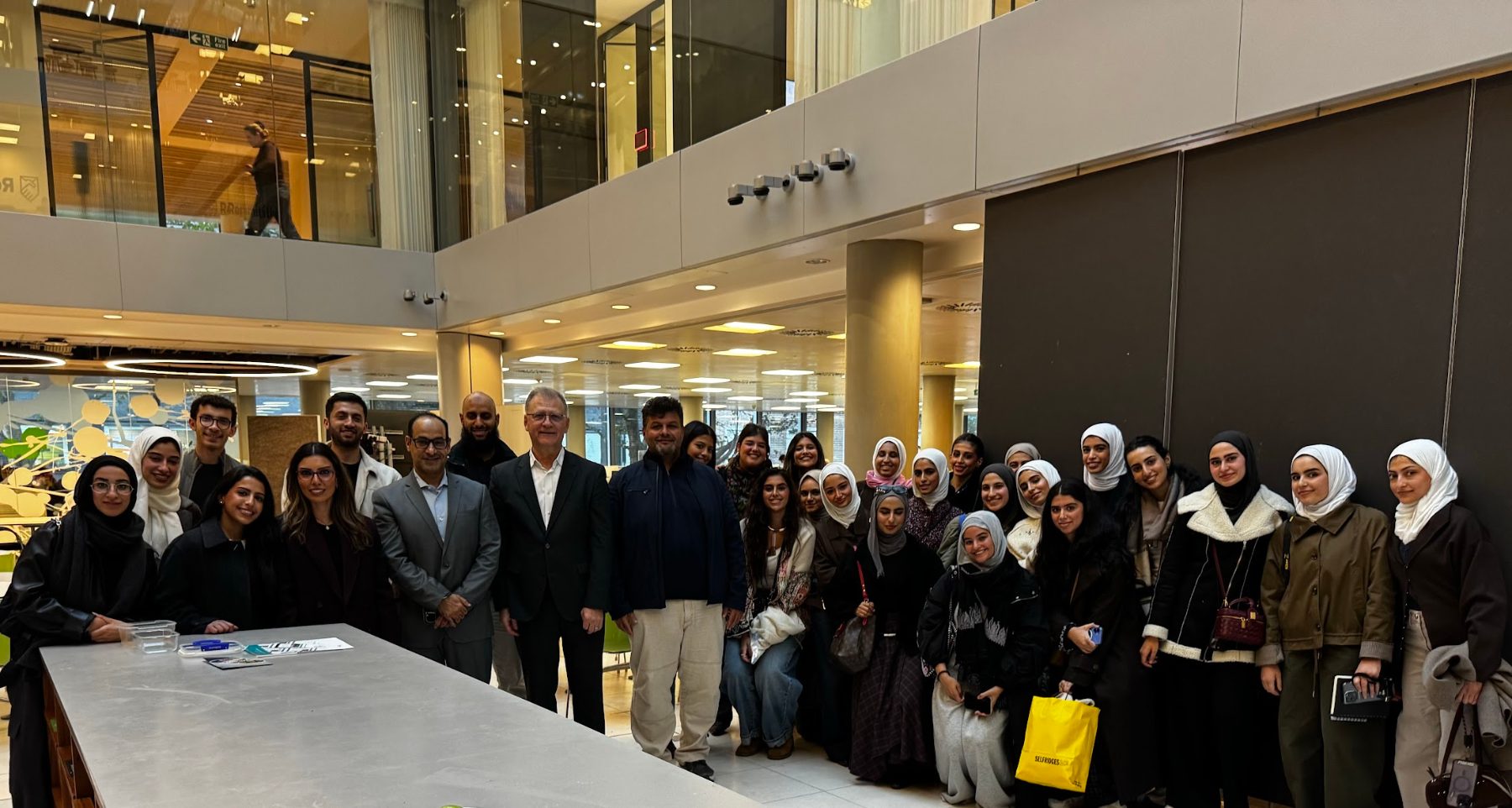
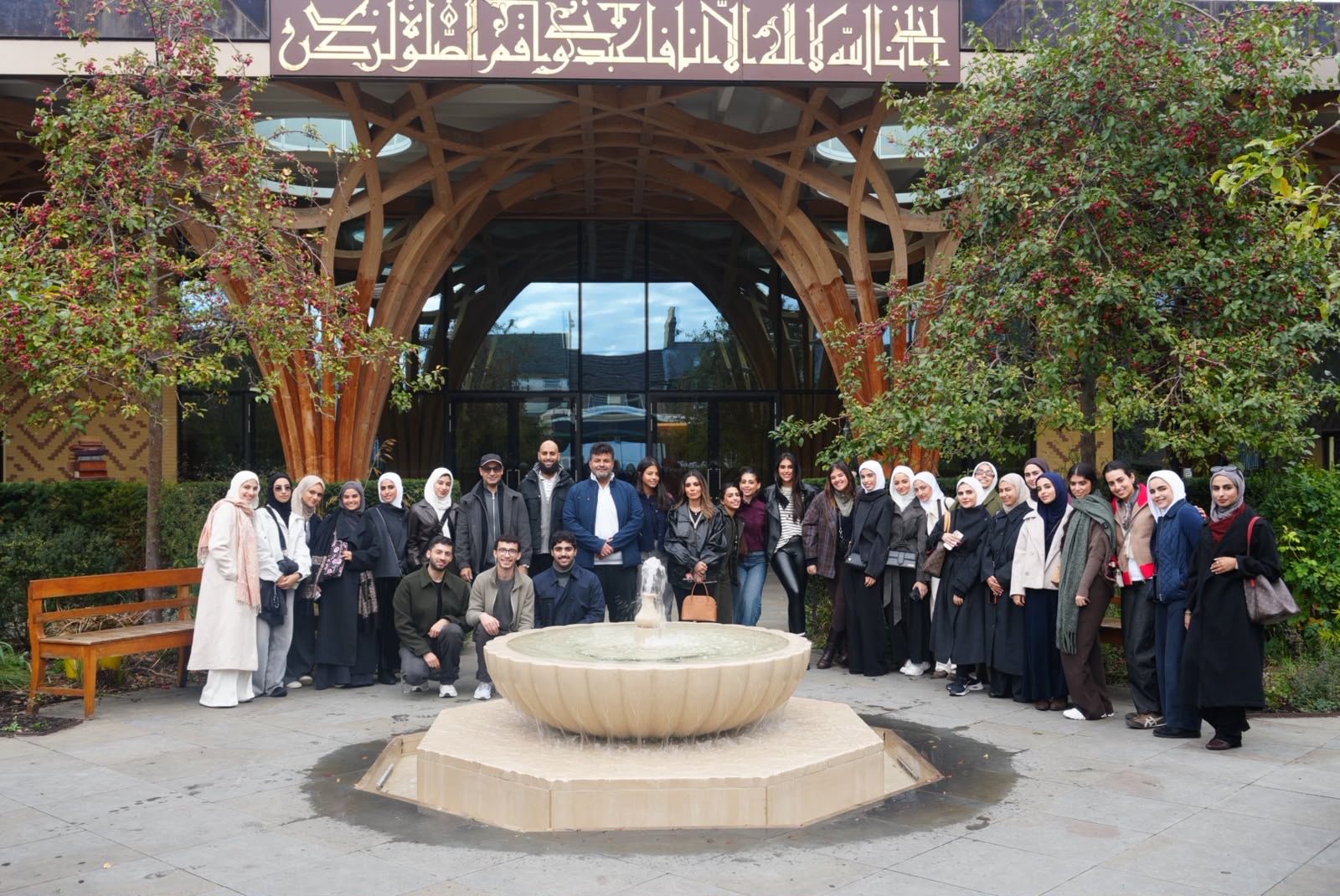
They read the Barbican's concrete by hand, compared The Bartlett and the Architectural Association on a single rainy day, studied Cambridge Central Mosque, worked in the RIBA Library and Archive, heard Craig Dykers of Snøhetta deliver the AIA UK / RIBA 2026 keynote, and met the teams at HOK, SOM and Foster + Partners.
The Story
The week in five chapters
Each day paired a place with a question for the graduation project: how to read a building on site, how schools teach design through research, and how practices and archives turn research into architecture. Choose a day to read its story.
Reading concrete
From the Barbican Estate to the steps of St Paul's
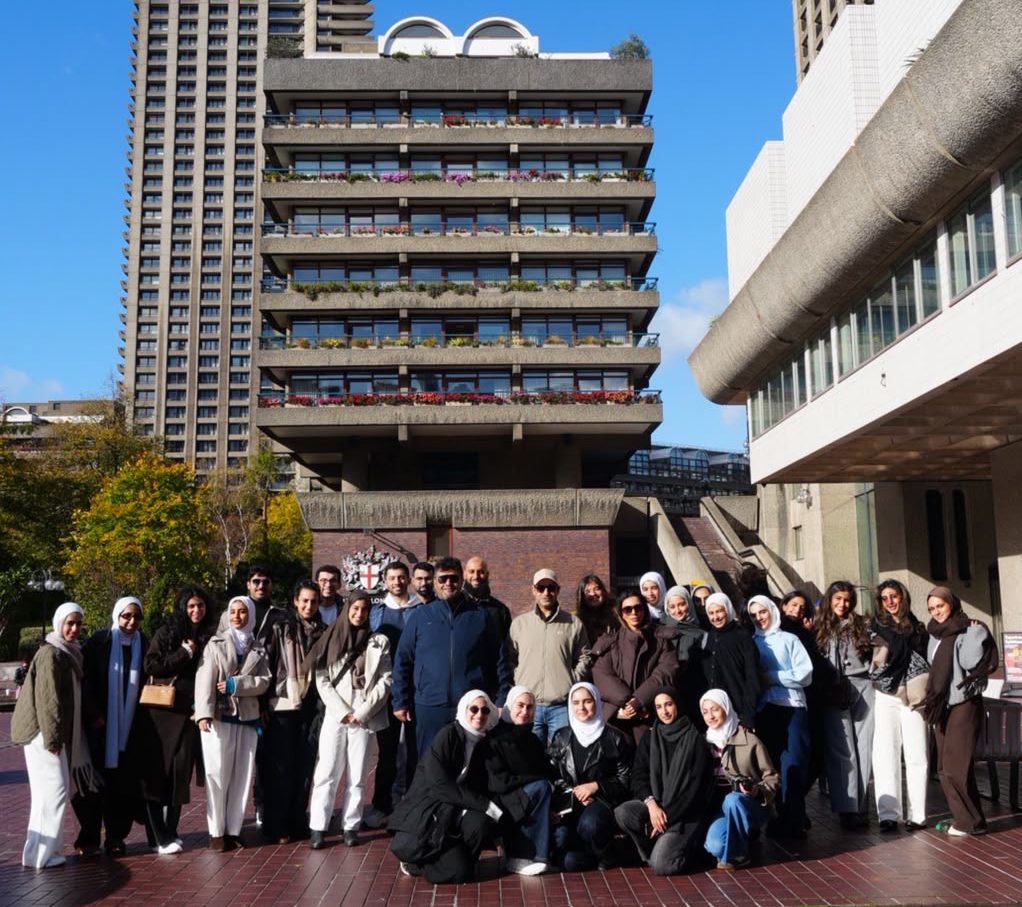
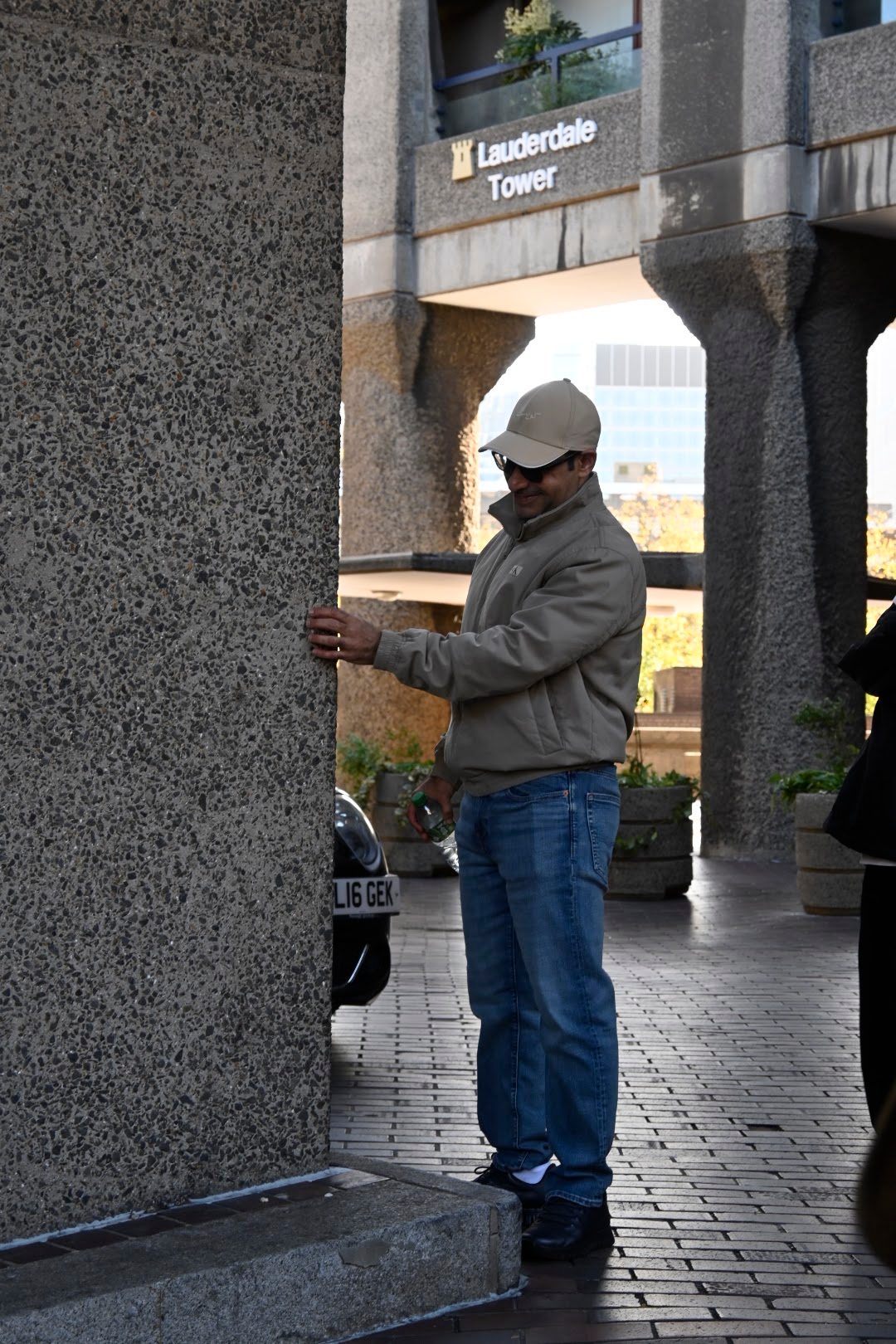
The week began with touch. On the Barbican's raised walkways, students ran their hands over the estate's bush-hammered concrete, traced how its podium lifts housing, culture and gardens above the street, and sketched the balconies stacked row upon row overhead.
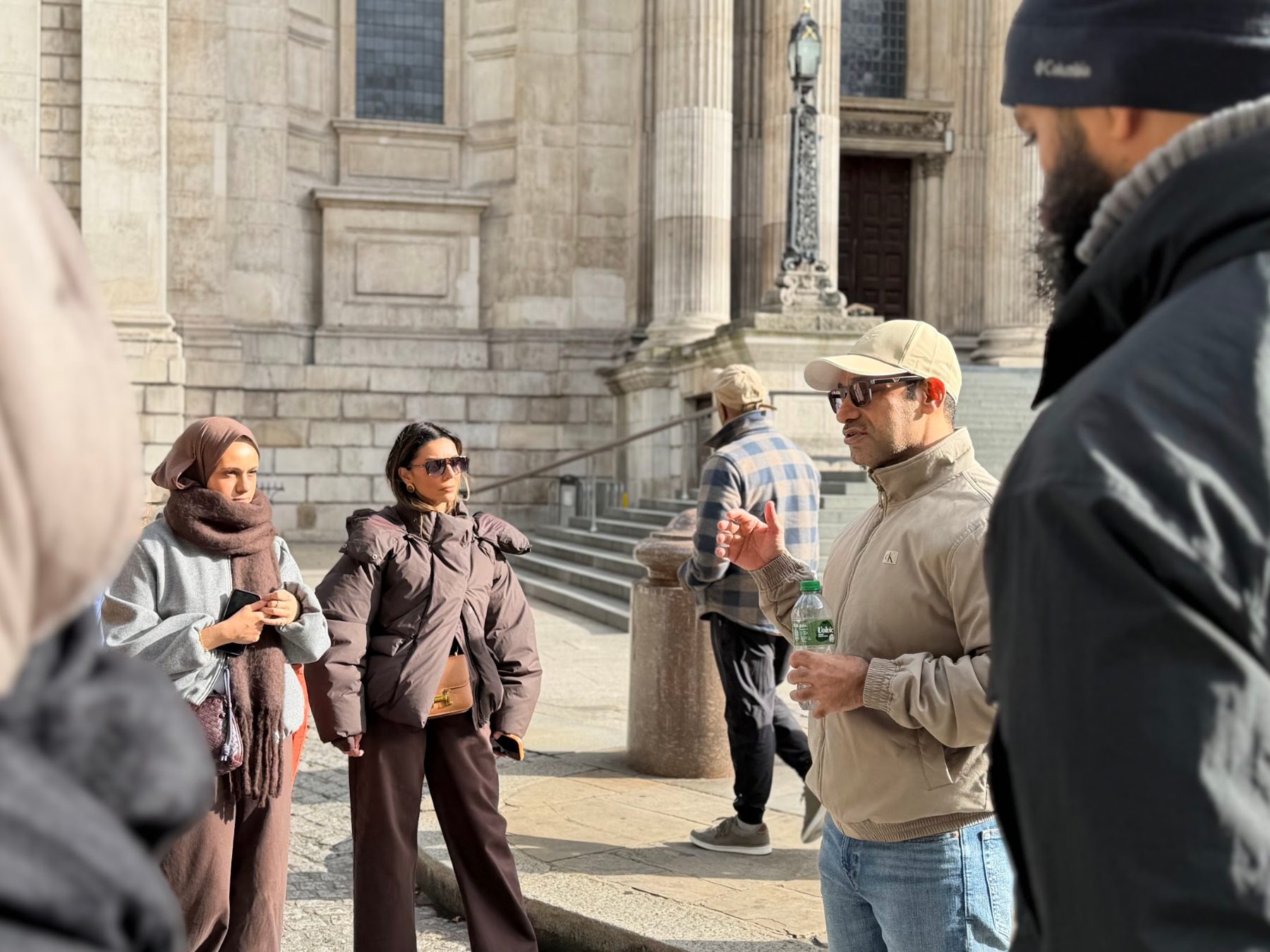
From there the walk cut through the City to St Paul's Cathedral. On the cathedral steps, with Wren's dome above them, the group held the first big discussion of the trip: how a building shapes the public space in front of it.
On film
On the steps of St Paul's
A few minutes from the first day's walk: the discussion in front of the cathedral.
Two schools in the rain
UCL & The Bartlett, then the Architectural Association
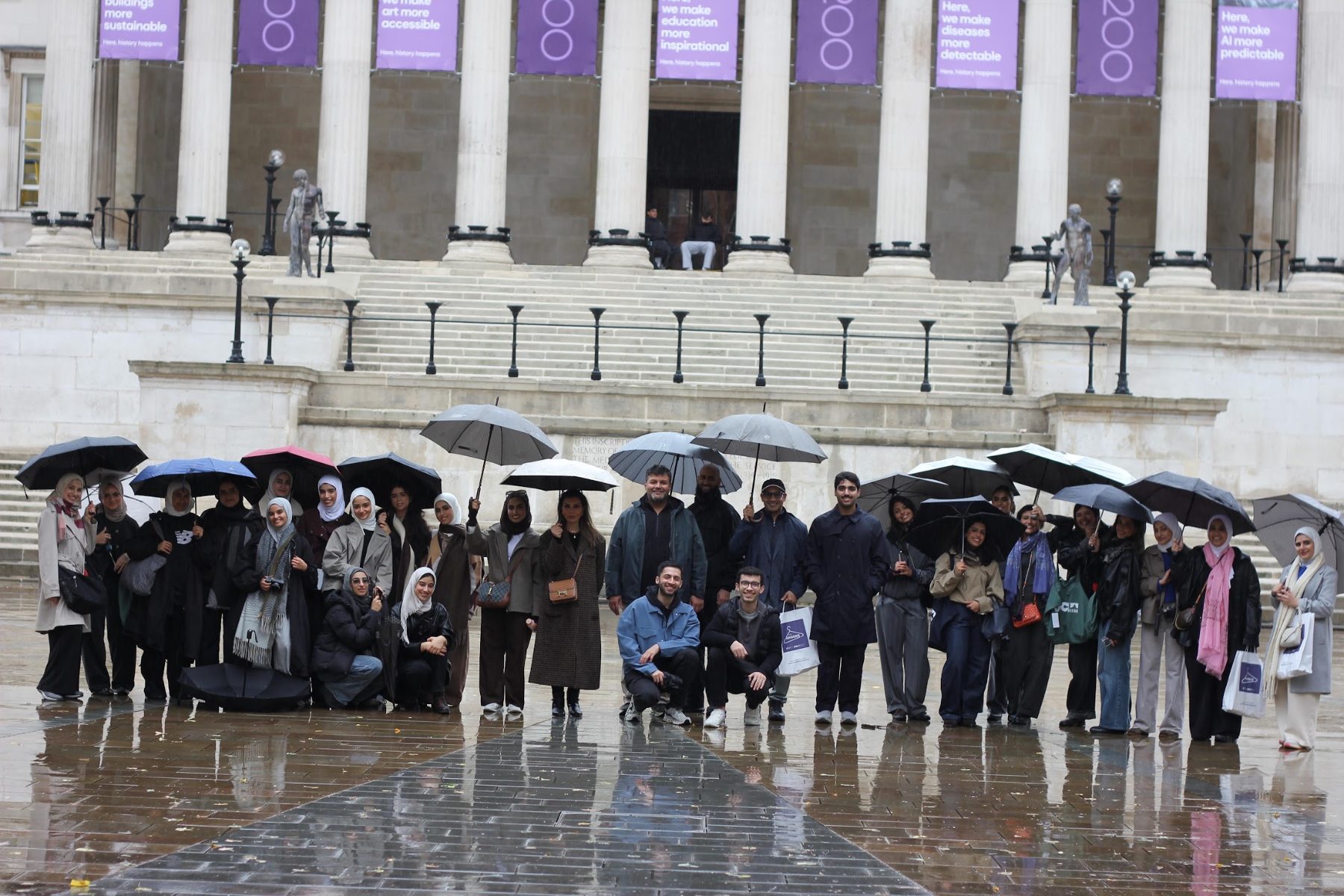
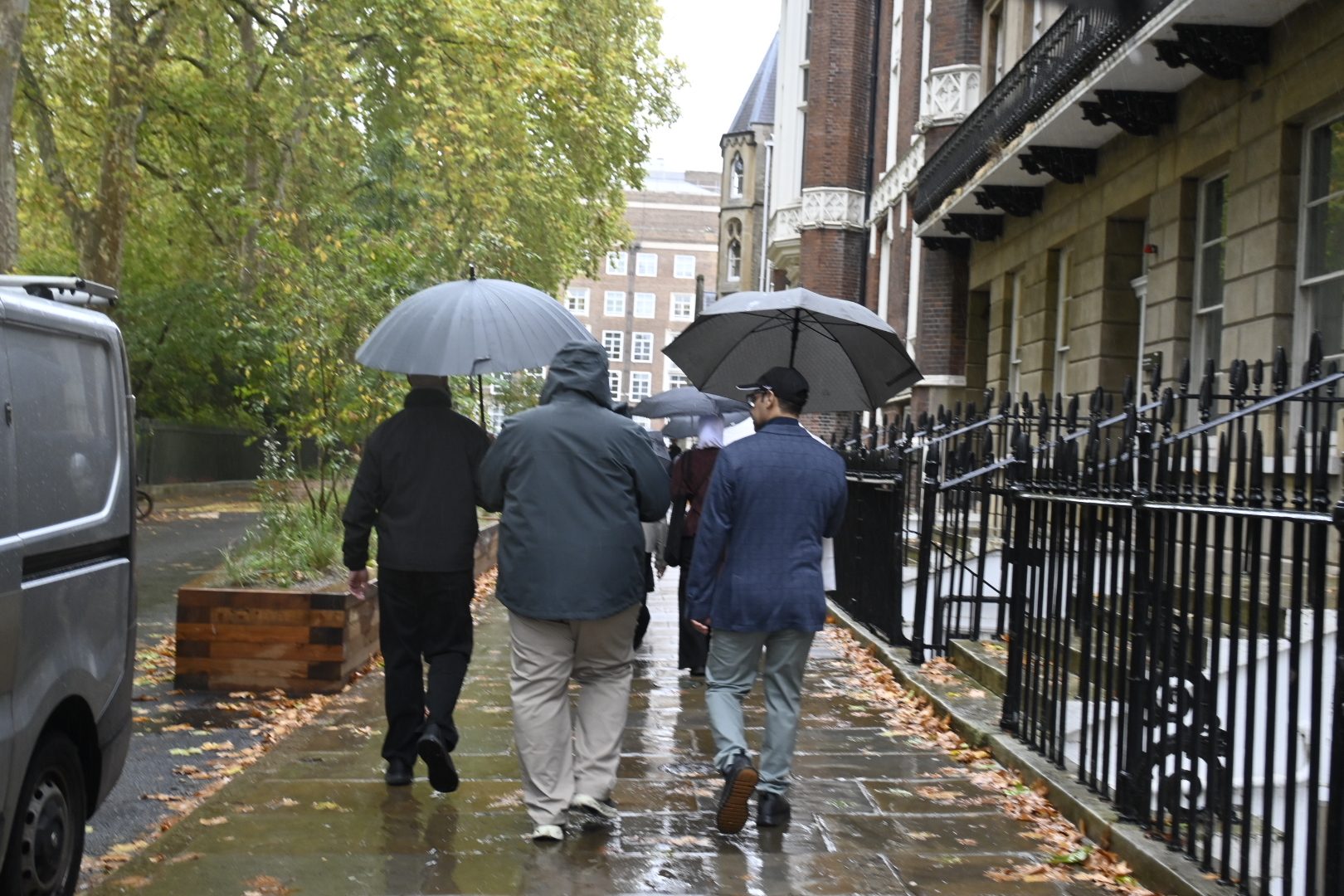
London's weather joined the programme. Under a canopy of umbrellas, the group crossed Bloomsbury's Georgian streets between two very different models of architectural education.
At UCL, home of The Bartlett, a research faculty sits inside one of the world's largest universities. A short walk away, the Architectural Association in Bedford Square is an independent school known for its experimental studios. Seeing both in one day gave students a direct comparison of how architecture is taught, and how research reaches the studio.
From the studio to the stage
HOK by day, the AIA UK / RIBA keynote by night
Tuesday moved from buildings to the people who make them. At HOK's London studio, the team walked students through how a global practice carries a project from early research to delivery.
In the evening, the group joined the AIA UK / RIBA 2026 keynote lecture at the Royal Institute of British Architects, given by Craig Dykers, co-founder of Snøhetta.
Keynote
Royal Institute of British Architects, London
A mosque of timber trees
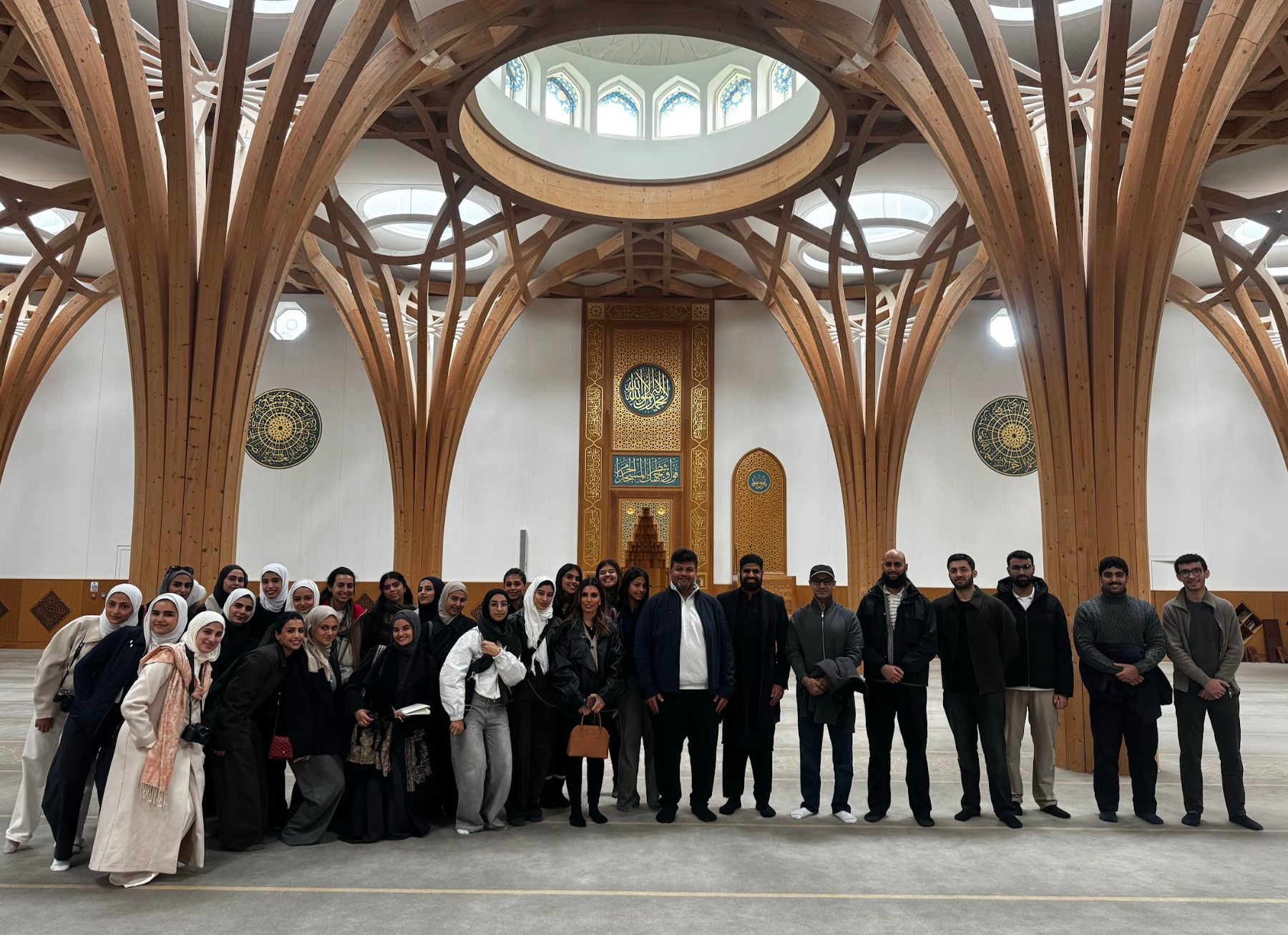
Cambridge Central Mosque and the University of Cambridge
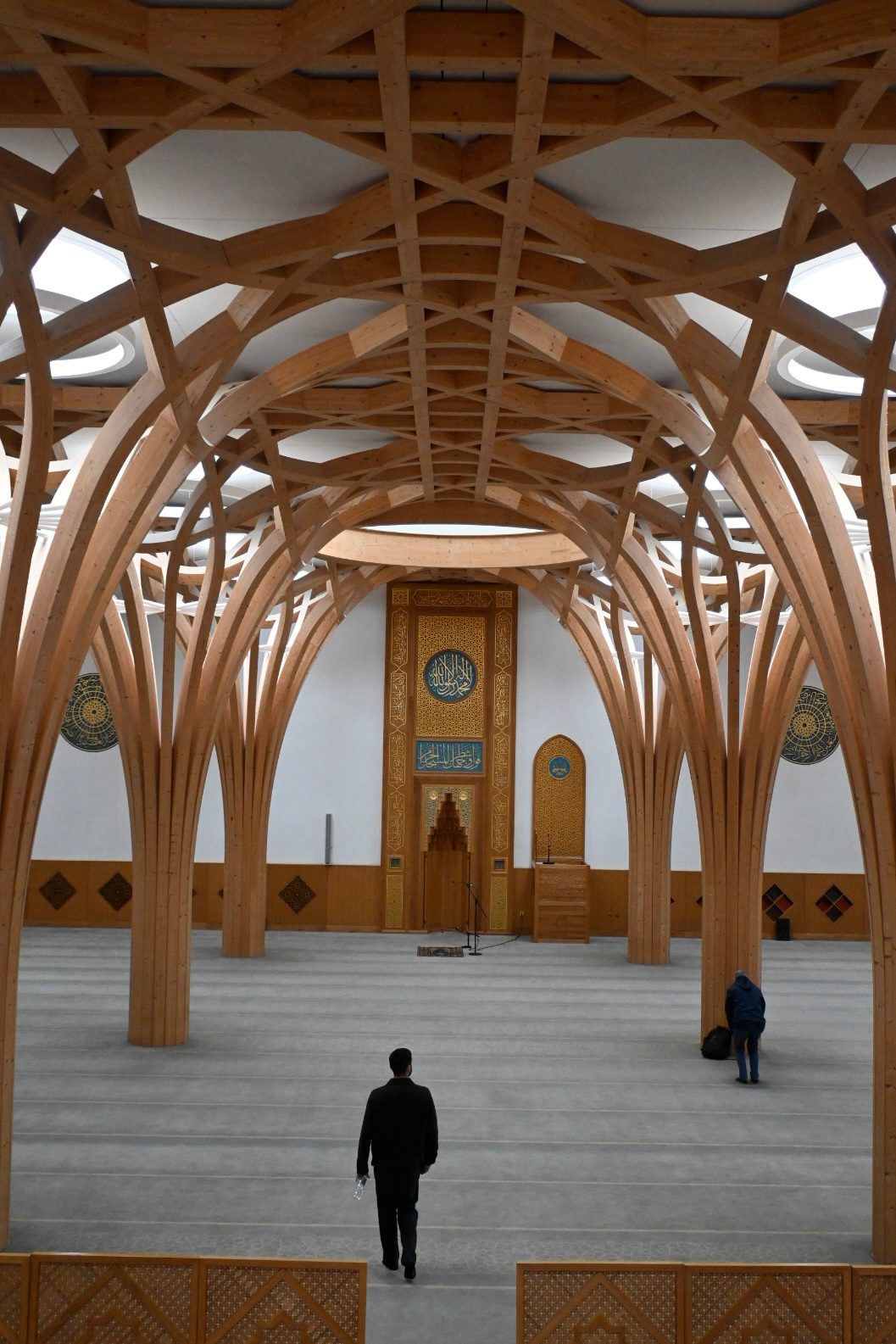
In Cambridge, everyone looked up. Inside Cambridge Central Mosque, designed by Marks Barfield Architects and opened in 2019, timber columns branch into a lattice vault, so that structure, light and geometry become a single gesture. Students worked through it as a full case study, from the garden and entrance portico to the prayer hall.
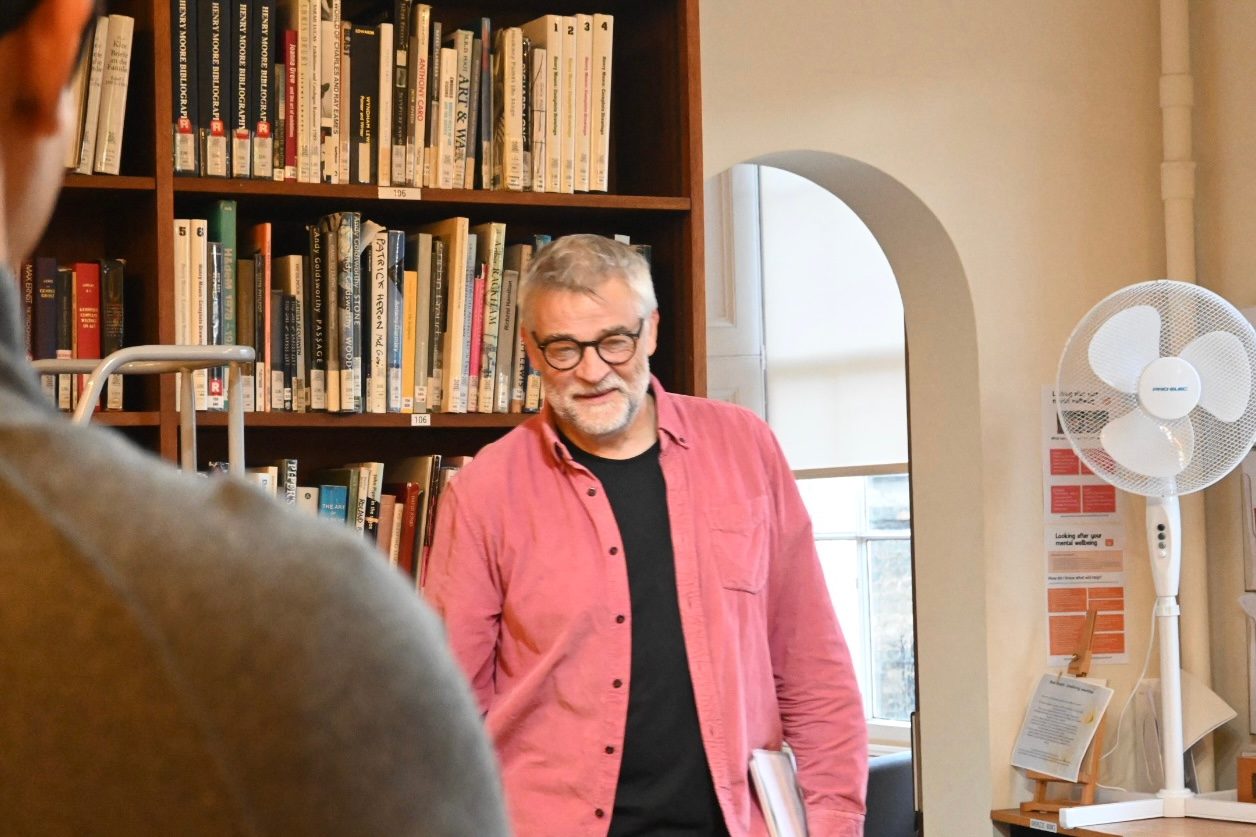
In the afternoon, a session among the library shelves of the University of Cambridge's Department of Architecture was followed by a walk through the city's streets and colleges.
Archives and offices
The RIBA Library & Archive, SOM and Foster + Partners
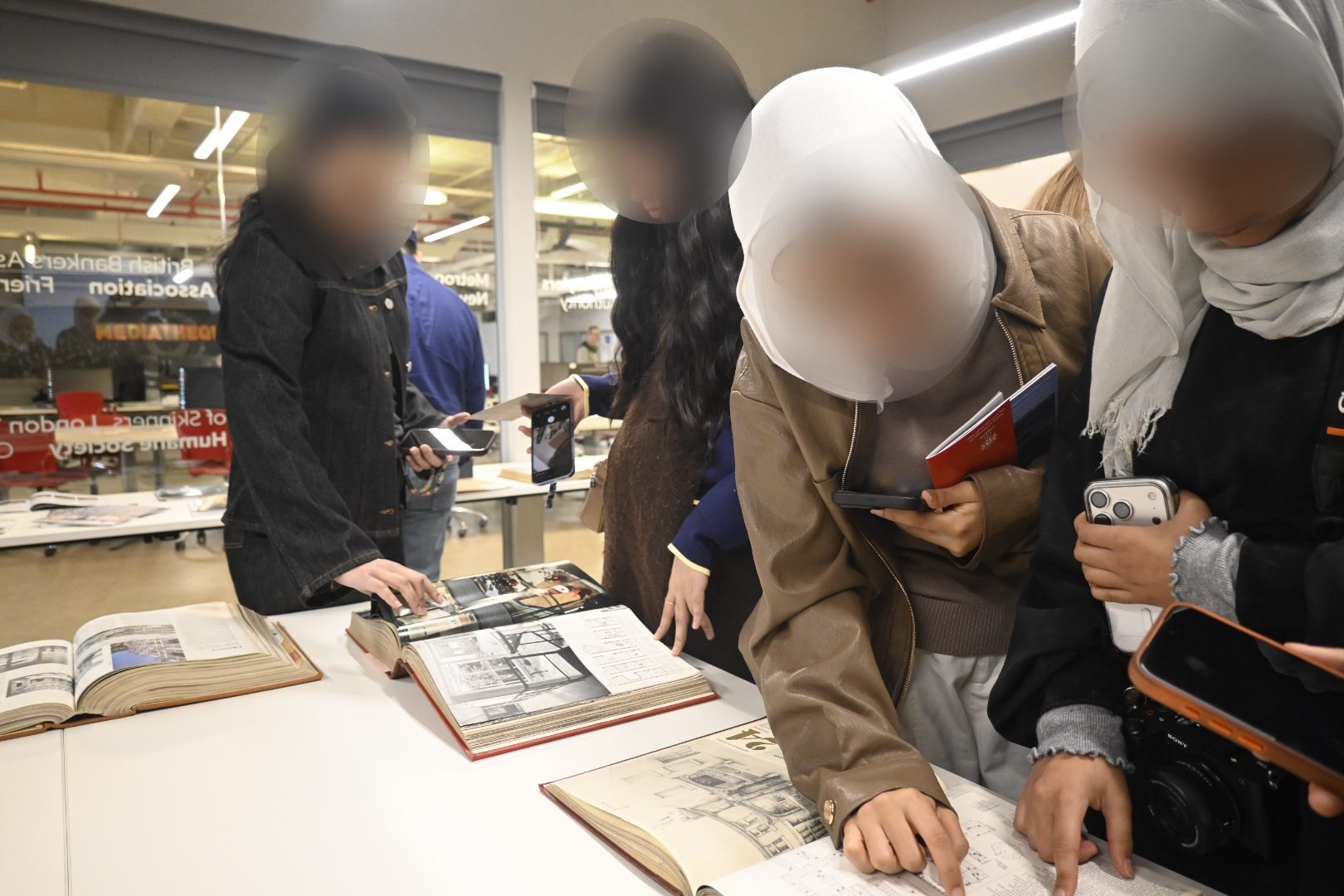
The final round began in the RIBA Library and Archive, where students leafed through books and drawings and photographed details to take back to their own projects.
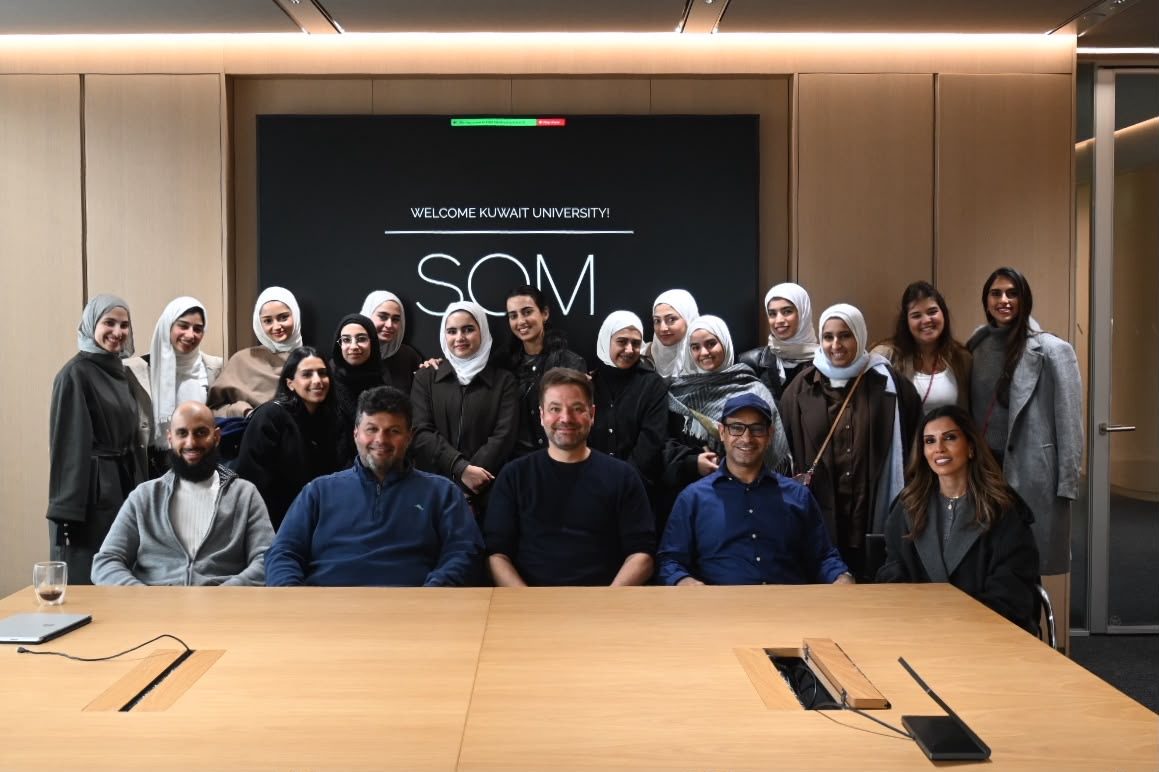
The afternoon took them inside two of the practices that shaped London's contemporary skyline. At SOM the screen read “Welcome Kuwait University!”; the day, and the visits, ended at Foster + Partners.
Epilogue · Fri 30 Oct
What came home
On Friday the group flew back to Kuwait with sketchbooks, photographs and field notes. In their first class back, each student presents a London precedent, the lessons it holds, the architectural principles behind it, and how it will shape their own graduation project.
Precedent
Reading buildings in person: sections, materials, details, adaptive reuse and the public life around them, from the Barbican to Cambridge Central Mosque.
Practice
Seeing how HOK, SOM and Foster + Partners turn research into design decisions, and hearing Craig Dykers of Snøhetta at the AIA UK / RIBA 2026 keynote.
Process
Working with drawings in the RIBA Library and Archive, and bringing home a research archive of sketches, diagrams, photographs and field notes that feeds directly into each student's graduation design.
“How can architectural representation become part of the design process, rather than simply a way of presenting the final design?”
— Guiding question · Graduation Research Study Trip · KARL, 2026
Workshop 01 · April 2026
& Housing Policy
Digital Public Spheres & Housing Policy in Kuwait
Rethinking state–market–citizen relations through deliberative democracy and Kuwait's landmark Housing Cities Law No. 118 of 2023.
Photography
Workshop Gallery
Opening keynote — full hall, KARL logo projected
Keynote speaker
Addressing participants
Workshop roundtable session
Engaged participants — front row
Research team at work
KARL members — The Promenade
Focus group — grassroots housing initiatives
Focus group — roundtable session
Policy discussion
Workshop facilitator presenting
Roundtable deliberation
Workshop Focus
The New Triangle of Governance
Urban housing decisions in Kuwait have historically been shaped by a bilateral relationship between state authority and capital. Digital platforms have introduced a powerful third force: the organised voice of citizens.
The State
Policy, legislation and public authority — including Kuwait's Housing Cities Law No. 118 of 2023 and the PAHW.
The Market
Real-estate development, private capital and the contracting sector — navigating public scepticism under new PPP frameworks.
The People
Grassroots housing initiatives, social media campaigns and citizen tactics that now penetrate the deliberative public sphere.
“Effective housing policy emerges when policymaker strategies intersect with citizen tactics within a deliberative public sphere, yielding an adaptive, participatory, and socially grounded legislative process.”
— Workshop Paper · Digital Public Spheres & Housing Policy · KARL, 2026
On the Horizon
Upcoming Workshops
2026 — Date TBD
Vernacular Architecture & Climate Adaptation in Kuwait
Examining how traditional Kuwaiti spatial typologies — the diwaniya, the courtyard house, the wind tower — can inform sustainable contemporary design in an era of extreme heat and changing urban patterns.
2026 — Date TBD
Mosque Architecture in the MENA Region: Identity, Form & Community
A critical survey of contemporary mosque design across Kuwait and the Gulf — interrogating how Islamic spatial tradition negotiates modernity, identity and congregational experience in the twenty-first century.
Research Programme
KARL's Core Research Areas
Regional & Vernacular Architecture
Documenting, analysing and reinterpreting the built heritage of Kuwait and the MENA region — from the pearl-diving port to the contemporary residential district.
Urban & Housing Studies
Critical examination of housing policy, urban morphology, residential typologies and governance frameworks — including the intersection of digital discourse with legislative practice.
Islamic & Mosque Architecture
Studying the spatial, symbolic and communal dimensions of Islamic architecture in the Gulf — exploring how faith, identity and modernity converge in mosque design across the region.
Health & Architecture
Investigating how the design of residential, medical and public spaces affects wellbeing, mental health and social behaviour — with a focus on Kuwait's unique urban and climatic context.
Architectural Pedagogy
Advancing architectural education through research-led studio practice, curriculum innovation and the integration of regional context into design thinking at Kuwait University and beyond.
Sustainability & Climate
Examining passive design strategies, material culture and urban microclimate in one of the world's most thermally challenging environments — drawing on vernacular intelligence and contemporary technology.
